
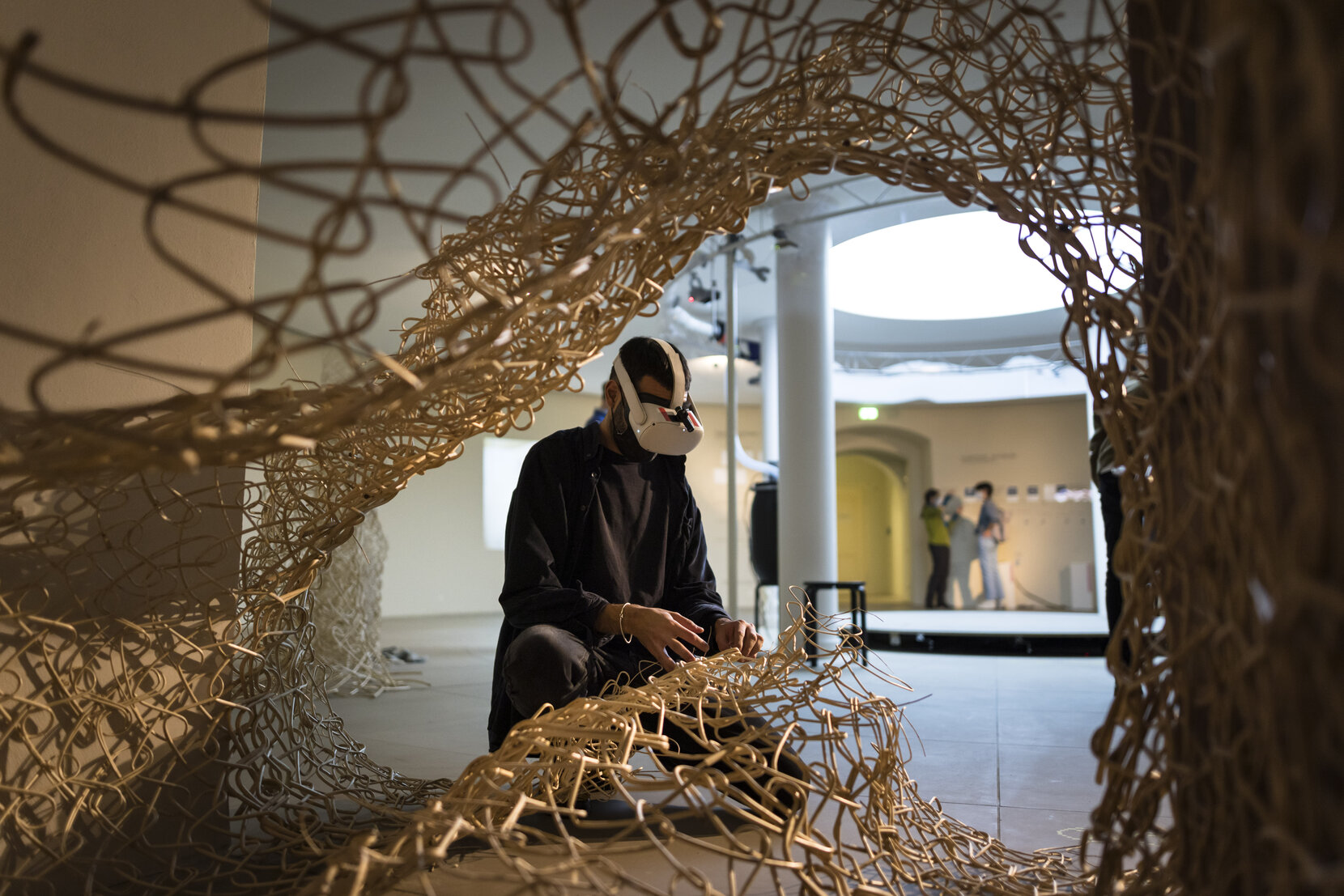
- Location:
- Festival centre at the Haus der Kulturen der Welt (HKW)
- Date:
- –
- Organizer:
- Berlin Science Week
From 1 to 10 November, Berlin Science Week once again offers the opportunity to discover the diverse research landscape of Brain City Berlin up close.
From 1 to 10 November, Berlin Science Week once again invites visitors to explore the research landscape of Brain City Berlin up close. Under the motto “In Touch”, the festival puts the personal side of science centre stage in around 300 events at more than 120 venues: How does research touch our everyday lives? How does it bring people together? The central meeting point for encounters, discussions and events is the festival centre at the Haus der Kulturen der Welt (HKW).
After last year’s themes of “Common Ground” and “Beyond Now”, Berlin Science Week is putting people in the spotlight this year. What does science mean to me personally? How does it change my life? The programme tells the stories of the researchers themselves: their motivations and experiences, their moments of wonder and of failure. “Science is something deeply human,” says festival director Dr Christian Rauch. “Driven by curiosity, creativity and passion, the work of researchers shapes how all of us think, feel and act.”
The programme is divided into seven event tracks, each a different point of contact between research and everyday life: “Trust & Responsibility”, “Everyday Infrastructure”, “Work & Learning”, “Body & Mind”, “Planetary Matters”, “Frontiers of Knowledge” and “Through Senses & Stories”. More than 230 organisations are involved in the festival, around two thirds of them from Berlin.
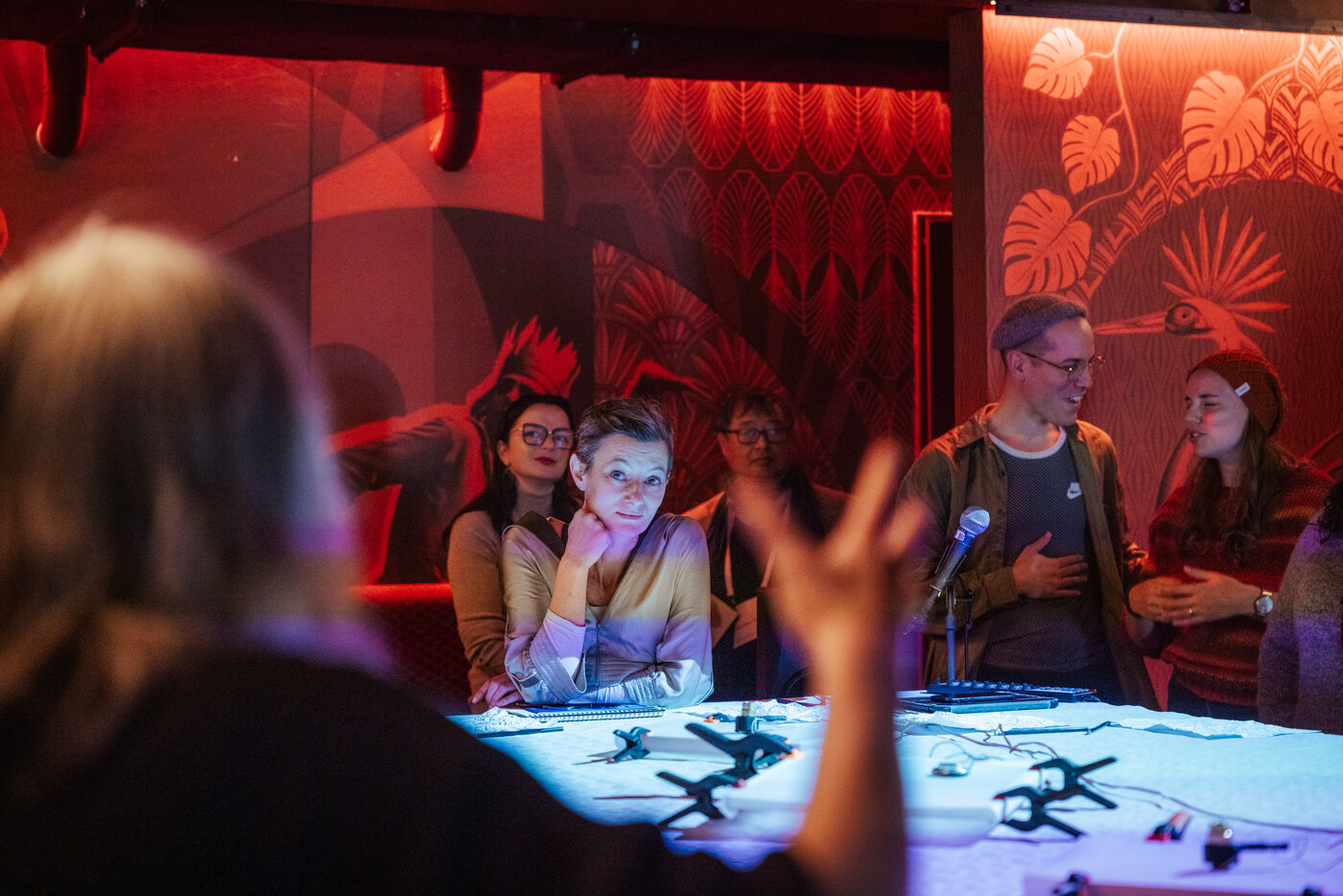
Festival centre at the HKW: three days, one venue
From 6 to 8 November, around 100 events and 25 exhibitors come together under one roof at the HKW: live talks, workshops, film screenings, performances and exhibition stands. Admission is free; all you need is the free three-day festival centre pass, available at berlinscienceweek.com.
If you are interested in the big questions of physics, you can follow the conversation between Nobel Prize-winning physicist Brian Schmidt and particle physicist Harry Cliff (CERN and University of Cambridge) on 6 November at 3.30 pm. In the Queen’s Lecture on 4 November from 5 pm, bioengineer Molly Stevens (Imperial College London and University of Oxford) shows how materials research can help detect diseases earlier and heal the body. On the evening of 6 November, the HKW series “Fertile Void” turns to quantum science and asks how it is interwoven with rituals, cosmologies and materials.
At the “Inspiration Stage” on 7 and 8 November, 32 early-career researchers from around the world each have twelve minutes to present science that is only just emerging: from harvesting drinking water from the air to the risks of AI becoming the interface to our knowledge.
For the first time, the festival centre also has its own programme for children aged four and over, including the space show by the German Aerospace Center (DLR) on 8 November. If you are looking for evening entertainment, “Queens of Science” on 7 November at 9.30 pm is the place to be: four drag queens who are also researchers combine comedy, choreography and science in one show.
Science across the city
At the same time, around 200 events will take place at more than 120 venues across Berlin from 1 to 10 November. Three quarters of them are free of charge, and many are accessible. A few highlights: on 2 November, researchers from the GFZ Helmholtz Centre for Geosciences and a winemaker use the 360-degree fulldome at the Zeiss-Großplanetarium to show how the RESET project is looking for ways to store CO₂ permanently as limestone. On 3 November, experts and affected families at DRK Kliniken Berlin Westend discuss how genomic testing could change newborn screening. And on 5 November, the French Embassy hosts a discussion on who owns space now that tens of thousands of new satellites are entering orbit.
New this year is “Wissen zwischen Büchern” (Knowledge between the books): together with con gressa and the network of Berlin’s public libraries, Berlin Science Week is bringing research to 33 neighbourhood libraries from Spandau to Marzahn. Fourteen research partners present their work there, from a quiz about the solar system to a discussion on age-friendly cities, free of charge and without registration.
Good to know
Berlin Science Week is organised by the non-profit Falling Walls Foundation and funded by the Senate Department for Higher Education and Research, Health and Long-Term Care. Festival partners are the Haus der Kulturen der Welt and Berlin Partner für Wirtschaft und Technologie. Most events are free of charge; some require registration as places are limited.
Would you like to present your research to a wider audience? Become a Brain City Ambassador and present yourself with a personal profile on the Brain City Berlin website and social media channels.