

Great opportunities for young talent
Berlin’s research institutions not only train highly qualified talent but are also among the city’s largest employers. Around 200,400 students are enrolled at Berlin’s universities and colleges (as of March 2025), 20 percent of them from abroad. Every year, more than 33,000 students graduate from over 1,000 degree programs. And around 20,000 people work in university research and teaching alone.

Gender equality policy in Brain City Berlin
Since 2005, Berlin has consistently ranked first in nationwide comparisons of gender equality. At Berlin’s universities, women’s and gender studies are firmly established through dedicated professorships, established research centers and gender studies programs. The Berlin Equal Opportunities Program (BCP) provides around 3.8 million euros per year to increase the representation of women at all qualification levels and in professorships. In the Berlin Dialogue for Gender Equality, the state government, university leaders and equal opportunities officers work closely together to continuously build on Berlin’s pioneering role in gender equity.
Studying in Berlin
At universities, universities of applied sciences or private universities
Full-time or part-time, dual study programs or alongside a job: future graduates in Berlin have many options, each with its own advantages. Berlin’s research landscape also offers a wide choice of higher education institutions:
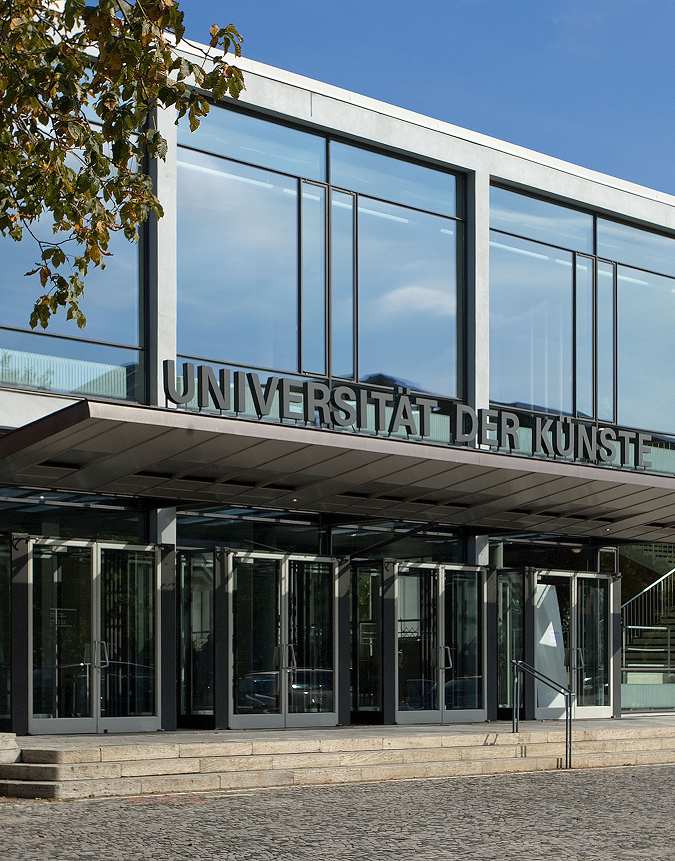
Universities
One city, four universities: Berlin is home to three of the world’s most renowned universities as well as Europe’s largest university of the arts and Charité – Universitätsmedizin Berlin. Since 2019, Freie Universität Berlin, Humboldt-Universität zu Berlin, Technische Universität Berlin and Charité have been funded as the Berlin University Alliance (BUA) under the Excellence Strategy of the German federal and state governments.
- Freie Universität Berlin (FU Berlin)
- Humboldt-Universität zu Berlin (HU Berlin)
- Technische Universität Berlin (TU Berlin)
- Berlin University of the Arts (UdK Berlin)
- In addition, Charité – Universitätsmedizin Berlin comprises a medical school and a university hospital.
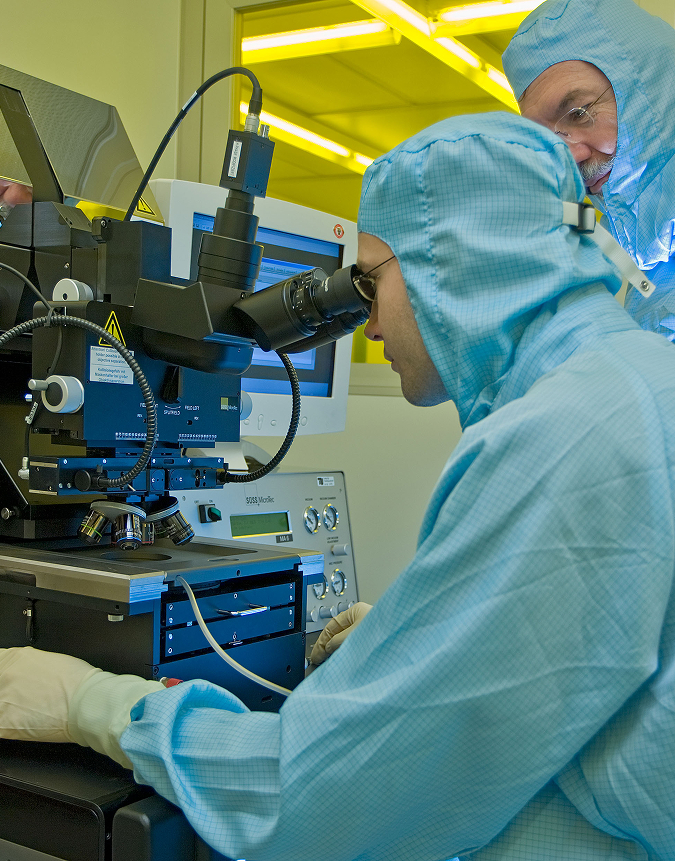 © Berlin Partner | Scholvien
Universities of applied sciences
More than a quarter of all students are enrolled at one of Berlin’s seven universities of applied sciences. Their research focuses range from robotics at Berliner Hochschule für Technik (BHT) to economics and business at the Berlin School of Economics and Law. The emphasis is on linking science and business, theory and practice.
- Berliner Hochschule für Technik (BHT Berlin)
- HTW Berlin University of Applied Sciences (HTW Berlin)
- Berlin School of Economics and Law (HWR Berlin)
- Alice Salomon Hochschule Berlin (ASH Berlin)
- Evangelische Hochschule Berlin (EHB)
- Katholische Hochschule für Sozialwesen Berlin (KHSB)
- Federal University of Applied Administrative Sciences (HS Bund)
 © Adobe Stock | TanTin
Private universities
Privately run universities complement the range of higher education in the capital: 23 state-recognized private universities offer students a mostly international education. They include the following Brain City Berlin partners: Arden University Berlin, Berlin School of Business and Innovation (BSBI), BSP Business and Law School, ESCP Business School Berlin, GISMA University of Applied Sciences, SRH University, University of Europe for Applied Sciences (UE) and VICTORIA International University of Applied Sciences.
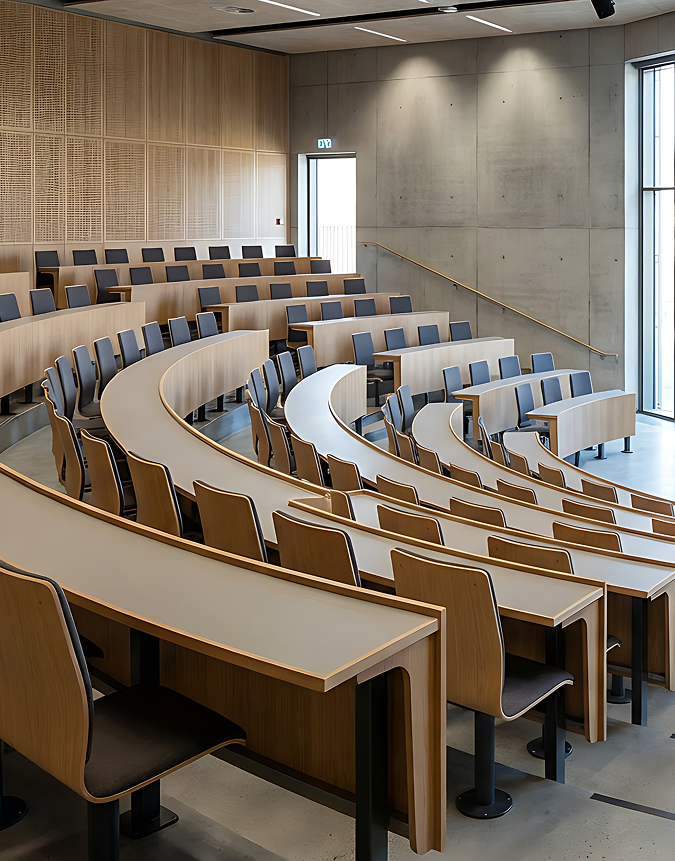 © Adobe Stock | Valadine
Other universities
More than 5,000 students are enrolled at Berlin’s four art universities. They shape Berlin’s art scene and make the capital one of Europe’s art metropolises.
- Berlin University of the Arts (UdK Berlin)
- Hochschule für Musik Hanns Eisler Berlin (HfM)
- Ernst Busch University of the Performing Arts Berlin (HfS)
- weißensee academy of art berlin (KHB)
Berlin is Germany’s start-up capital. Around 500 start-ups are founded here every year, including many innovative spin-offs from research in emerging fields such as deep tech, biotech and New Space. This is made possible by the highly interdisciplinary research at the universities, universities of applied sciences and non-university research institutions of Brain City Berlin.
Start-up programs and specialized incubators actively drive and support the transfer of knowledge and technology between science and business.
- Science & Startups: the alliance of the start-up centers of the Berlin University Alliance (Freie Universität Berlin, Humboldt-Universität zu Berlin, Technische Universität Berlin and Charité – Universitätsmedizin Berlin). In 2025, the ranking “Europe’s Leading Start-up Hubs” listed Science & Startups among the top 20.
- Startup Incubator Berlin (SIB): the start-up center of the Berlin School of Economics and Law.
- HTW Startup: the start-up center of HTW Berlin University of Applied Sciences.
- BHT Startup Hub: With its Lean Incubator program, Berliner Hochschule für Technik supports first-time founding teams and early-stage start-ups.
- Chemical Invention Factory (John Warner Center for Start-ups in Green Chemistry, CIF): This incubator specializing in green chemistry is scheduled to open in 2026 on the TU Berlin campus in Charlottenburg. The CIF will provide chemistry start-ups with offices, labs and analytical equipment.
- Leap Quantum Technology Hub: Opened in 2023 in Berlin-Adlershof, this coworking space focuses on quantum technologies (QT). Leap connects innovative minds from the start-up scene with researchers from Berlin’s QT sector.
- Bayer Co.Lab Berlin: At the end of 2024, Bayer launched its new life science incubator. Co.Lab Berlin is part of Bayer’s global network of life science incubators in key innovation hubs such as Cambridge (USA), Kobe (Japan) and Shanghai (China).
- K.I.E.Z. – Artificial Intelligence Entrepreneurship Center: This Science & Startups initiative supports young entrepreneurs in the field of artificial intelligence with scientific expertise and access to capital, industry partners and talent.
- Food Campus Berlin: This innovation campus for the future of food is being developed in Berlin-Tempelhof. Its focus areas are smart proteins, personalized nutrition, circular economy, and robotics and AI.
- BerlinBioCube: Opened in 2023, this start-up center offers life science companies a total of 8,000 square meters of space for modern labs, offices and shared areas on five floors. It is located on Campus Berlin-Buch, which specializes in the life sciences.
- Berlin’s Zukunftsorte (Future Places): Berlin’s eleven Zukunftsorte are lively ecosystems of science and business with strong innovative capacity. Each Zukunftsort has its own focus. Numerous start-ups based in their start-up centers and coworking spaces benefit from direct proximity to research and industry. The “mother” of all Zukunftsorte is the Adlershof Science and Technology Park.
- Dahlem Research School (Freie Universität Berlin)
- Humboldt Graduate School (Humboldt-Universität zu Berlin)
- Center for Junior Scholars, CJS (Technische Universität Berlin)
Graduate schools also contribute to training early-career researchers in Brain City Berlin. They strengthen the internationalization of Berlin as a center of science and play a key role in supplying Berlin’s leading research with talented young researchers. Graduate schools in Berlin include:
“Use programs like STARTUP TEENS or the EXIST Business Start-up Grant to get support or your first equity-free funding. Build a minimum viable product (MVP), a basic version of your product, quickly so you can test it. Above all, don’t be afraid to share your idea: the more you talk to people about it, the more valuable the feedback you’ll get.”
Lia Carlucci
Food Campus Berlin